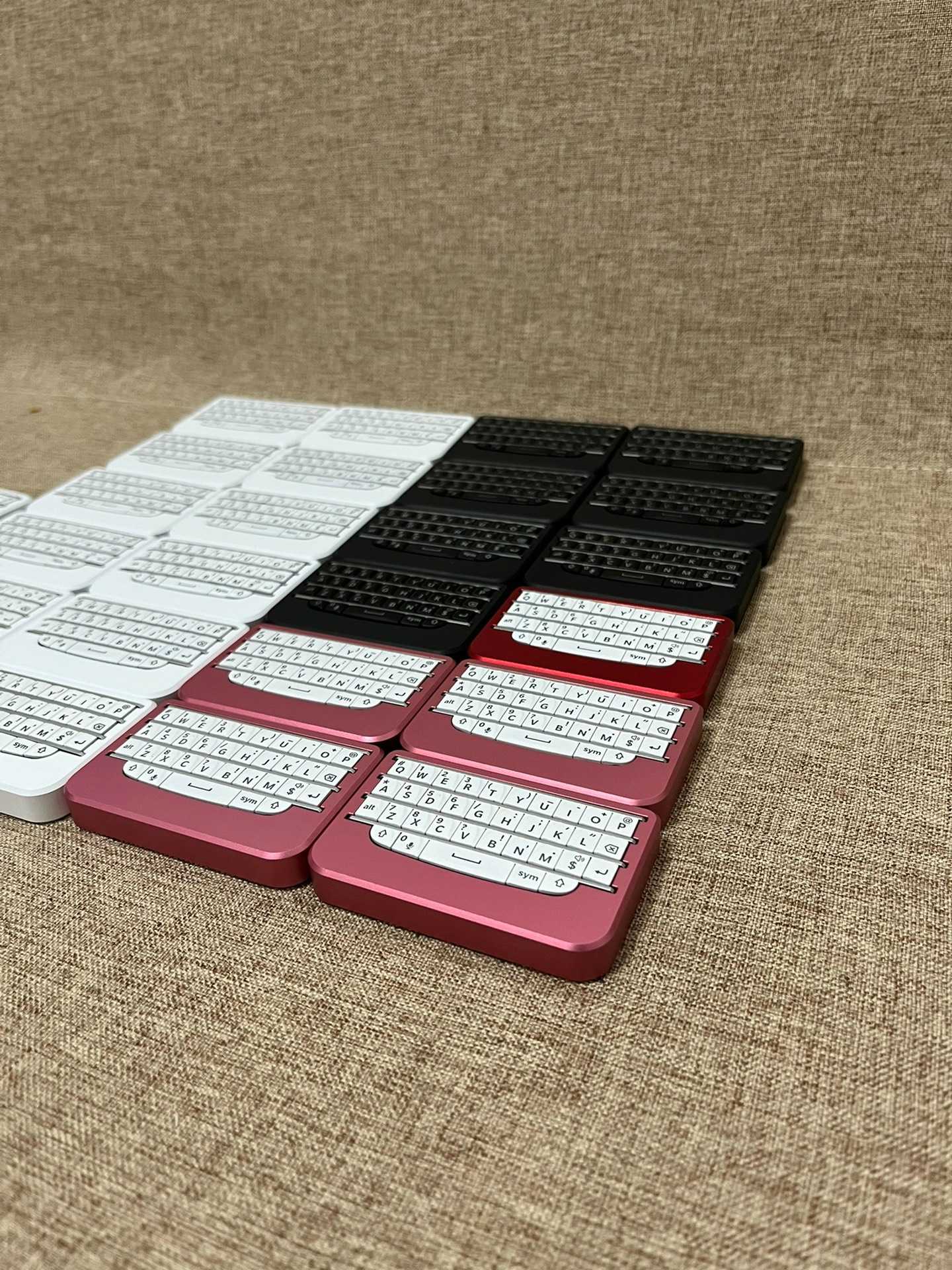
What Is a Key Matrix? Rows, Columns, Diodes, and Why Mini Keyboards Work

Short definition

A key matrix is the wiring pattern that lets a keyboard controller read many keys efficiently. Instead of giving every key its own separate wire, the keyboard arranges keys into rows and columns. When you press a key, the controller detects the intersection of a row and a column.

Why keyboards use rows and columns

A compact keyboard has limited space for wiring and electronics. A matrix reduces the number of controller pins needed to read the keyboard. This makes small layouts practical. Without a matrix, even a small keyboard would need far more direct connections, making the board harder to design and build.

Simple matrix example

Concept Meaning Buyer-friendly explanation
Row One horizontal scan line The controller checks whether a key in that row is active.
Column One vertical scan line The controller combines row and column to identify the key.
Intersection The pressed key location Row 2 plus column 4 can mean a specific key.
Diode One-way electrical component Helps prevent ghosting when several keys are pressed.

What ghosting means

Ghosting happens when a keyboard incorrectly detects a key that was not actually pressed. This can occur in matrix designs when several keys are held at the same time and current flows through unintended paths. Diodes help by making current flow in only one direction, which helps the controller identify the real pressed keys.

Why diodes matter less visibly but more practically

Most buyers never see the diodes, but they can feel the result. A keyboard that handles multiple key presses cleanly feels more reliable during shortcuts, layers, and fast typing. On a mini keyboard, this matters because layers often require combinations. The design needs to support those combinations without confusing the controller.

How matrix design affects mini keyboards

Mini keyboards rely on layers and shortcuts because they have fewer physical keys. That means key combinations are not rare edge cases; they are part of normal use. A good matrix design supports those combinations cleanly. It also helps keep the keyboard compact, efficient, and practical to manufacture.

What this means for BBKeyboard buyers

When comparing BBKeyboard models, you do not need to inspect the matrix directly. Instead, look for signs of serious keyboard design: reliable typing, clear layer behavior, n-key rollover claims where available, useful firmware, and good setup documentation. The BBKeyboard hardware guide explains how the matrix fits with controller, USB-C, battery, and material decisions.

Matrix vs firmware

The matrix detects which key is pressed. Firmware decides what that press means. For example, the same physical key may produce a letter on the base layer and a symbol on a function layer. Matrix design and firmware design work together: one reads the key, the other turns it into useful input.

Common questions

Does every keyboard use a matrix?

Most keyboards use some form of matrix because it is efficient. The details vary by size, layout, controller, and feature goals.

Do I need to care about diodes as a buyer?

You do not need to choose a product only by diode details, but you should care about the outcome: accurate multi-key behavior and reliable shortcuts.

How does this connect to remapping?

Remapping changes what a key does in firmware. The matrix still identifies which physical key was pressed. That is why the firmware and remapping guide is the natural next step after understanding the matrix.

Related BBKeyboard guides

Read the hardware guide for components, the firmware guide for layers and remapping, and the buyer guide if you want to choose between current models.

Product examples

Matrix design is hidden inside the keyboard, but it supports the experience buyers notice on the outside. BBQ10KBD needs compact, reliable key detection for phone-first typing. BBQ20KBD needs reliable combinations for layers, navigation behavior, and productivity shortcuts. BBP9981KBD Pro adds the extra challenge of combining keyboard input with pointer-control features.

Matrix design and rollover

Rollover describes how many simultaneous key presses a keyboard can detect correctly. On a compact keyboard, rollover matters during shortcuts and layer combinations. If a user holds a layer key and presses another key for a symbol, the keyboard needs to register the intended combination. That is one reason technical details like matrix design and diodes connect directly to user experience.

How to evaluate without opening the keyboard

Buyers do not need to inspect the circuit board. Instead, they can evaluate outcomes. Does the keyboard type reliably? Do layers behave predictably? Do common shortcuts work? Does the product documentation explain remapping and troubleshooting? Does the model link technical features to real workflows? Those outcomes are more useful than a bare component list.

Why this article should not stand alone

A key matrix article is useful, but it should feed the broader hardware and firmware cluster. Readers who understand rows, columns, and diodes should next learn how firmware maps those presses to layers and how hardware choices affect daily use. That is why this article points to the hardware guide, firmware guide, and product pages.

Buyer takeaway

A matrix is one of the reasons a tiny keyboard can behave like a real keyboard. It makes compact hardware possible, diodes help with multi-key accuracy, and firmware turns the detected key into useful output. For a BBKeyboard buyer, the practical lesson is simple: choose a model with reliable typing, clear layer behavior, and documentation that makes the hidden hardware understandable.

For current buyers, this matters most when choosing a keyboard for shortcuts, layers, and fast correction.

Leave a Reply